
Results
Here you can find SSLiP’s published articles.
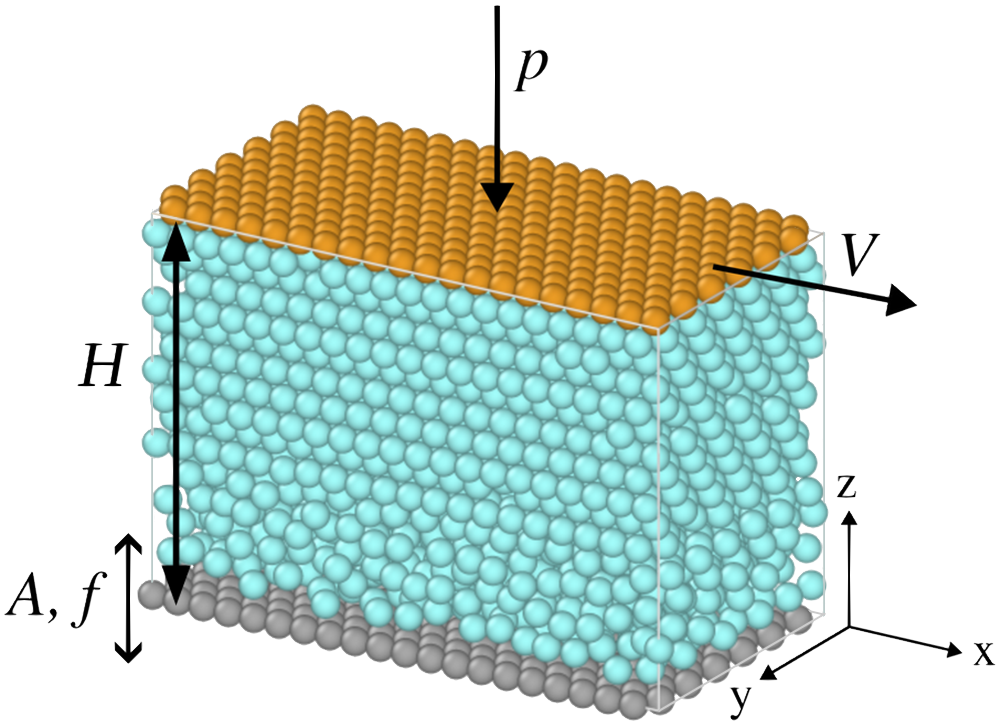
Superlubricity in granular shear flows under external vibrations.
Diego Berzi, Melisa M. Gianetti, and Dalila Vescovi
Soft Matter, May 2026
Abstract
We investigate the use of external vibrations to reduce macroscopic friction in pressure-imposed granular flows sheared between bumpy planes, in the absence of gravity, using the discrete element method. We observe that the system becomes superlubric, i.e., the macroscopic friction is less than 0.01, if one of the bumpy planes oscillates with a sufficiently large velocity amplitude. We quantify the reduction in the energy dissipated by the system through the work of the shear stress induced by the reduction in macroscopic friction and the external energy required to make the bumpy plane oscillate for different combinations of amplitude and frequency, and imposed pressure. We propose a phase diagram and criteria in terms of imposed pressure and velocity amplitude of oscillations to predict the resistance to shear.
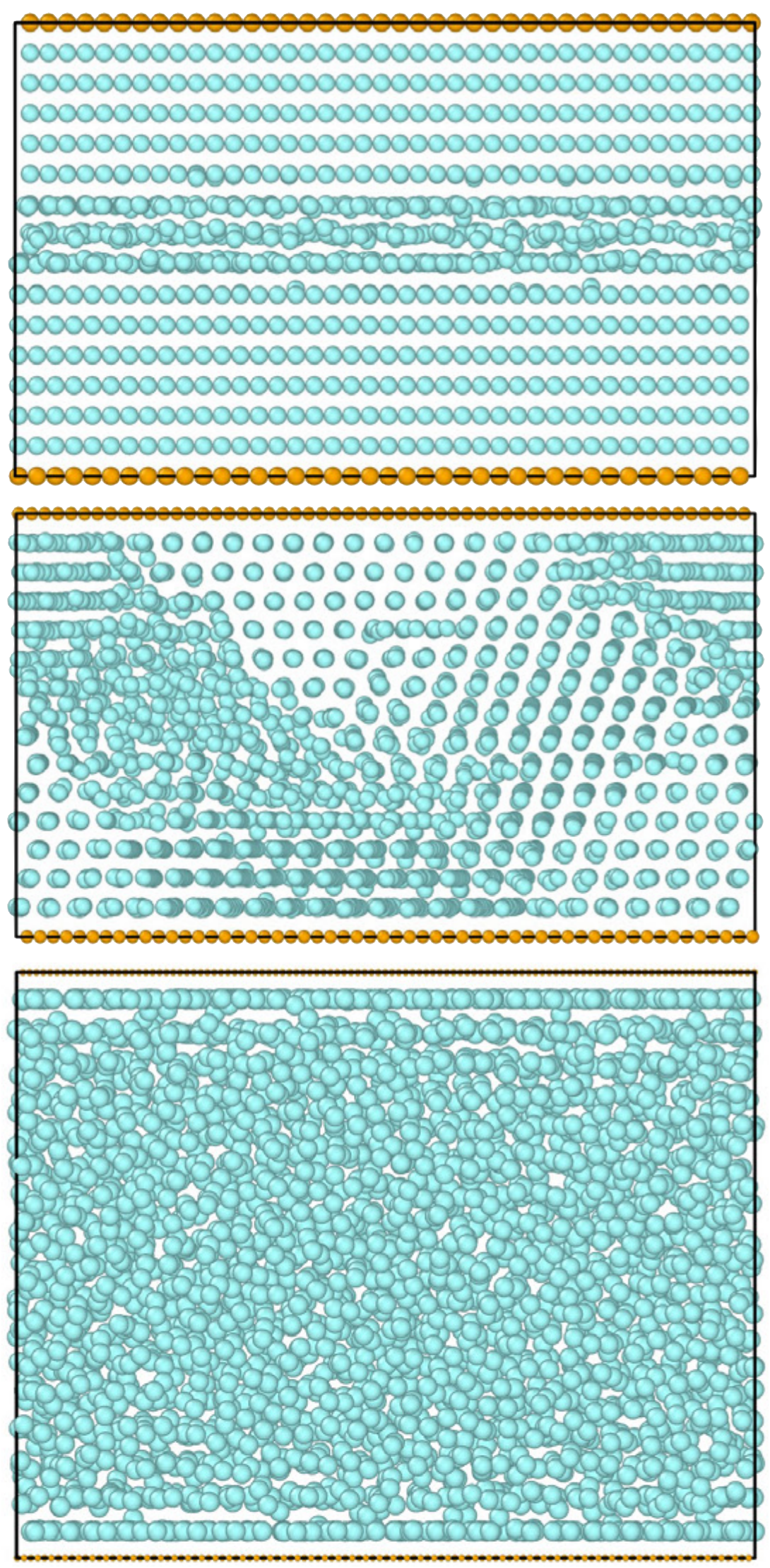
Pressure-controlled granular shear flows between bumpy planes.
Dalila Vescovi and Diego Berzi
EPJ Web of Conferences: Powders & Grains, December 2025
Abstract
In this work, DEM numerical simulations of granular systems sheared between two rough countersurfaces and under steady, constant-load conditions, have been performed. In the simulations, a collection of identical, frictionless spheres is sheared between two parallel bumpy walls moving at constant velocity in opposite direction, and the rough walls are made bumpy by gluing particles in a regular array. The main purpose of the research is to investigate the lubricant properties of granular particles in a sliding interface with multiple contact asperities, with the long-term goal of designing realistic transport systems for the industry of particulates with extremely low energy-demand. We focus particularly on high applied loads, relevant for practical applications of granular lubricants, which may lead to crystallization of the granular system with significantly increase in the shear resistance. A systematic investigation of the role played by boundary roughness on the macroscopic friction and crystallization process has been conducted, to find the best combination of micro and macro parameters to reduce shear resistance.
A Theoretical Study on Friction of Macroscale Patterned Surfaces: Implications for Scaling Up Superlubricity.
Viet Hung Ho, Melisa M. Gianetti, Ahmed Uluca, Aaron D. Sinnott, Bjørn Haugen, Graham L. W. Cross, and Astrid S. de Wijn
ACS Applied Materials & Interfaces, September 2025
Abstract
“Structural superlubricity”, a state of frictionless sliding between crystalline surfaces, has been observed at the nanoscale and microscale. However, achieving it at the macroscale requires further investigation. Inspired by recent experimental studies, we theoretically examine the friction behavior of macroscale patterned surfaces composed of microscale bumps coated with superlubricious two-dimensional materials. We performed numerical simulations with the discrete element method. The Hertz contact model, along with a modified tangential Mindlin contact model, is employed to capture the nonlinear relationship between the coefficient of friction and normal load. Our results reveal that the friction behavior is significantly influenced by the radius of the microscale bumps, the durability of the coating, and the elasticity of the surface, and we show how those can be tuned to improve friction properties. Additionally, we analytically investigate the deformation mechanisms of the surface structure and derive scaling laws for parameters and the breakdown of superlubricity. The simulation results show strong agreement with the analytical derivations of power laws for scaling of various quantities with the total macroscopic load. Finally, we examine imperfect conditions by investigating how height variations impact frictional performance.
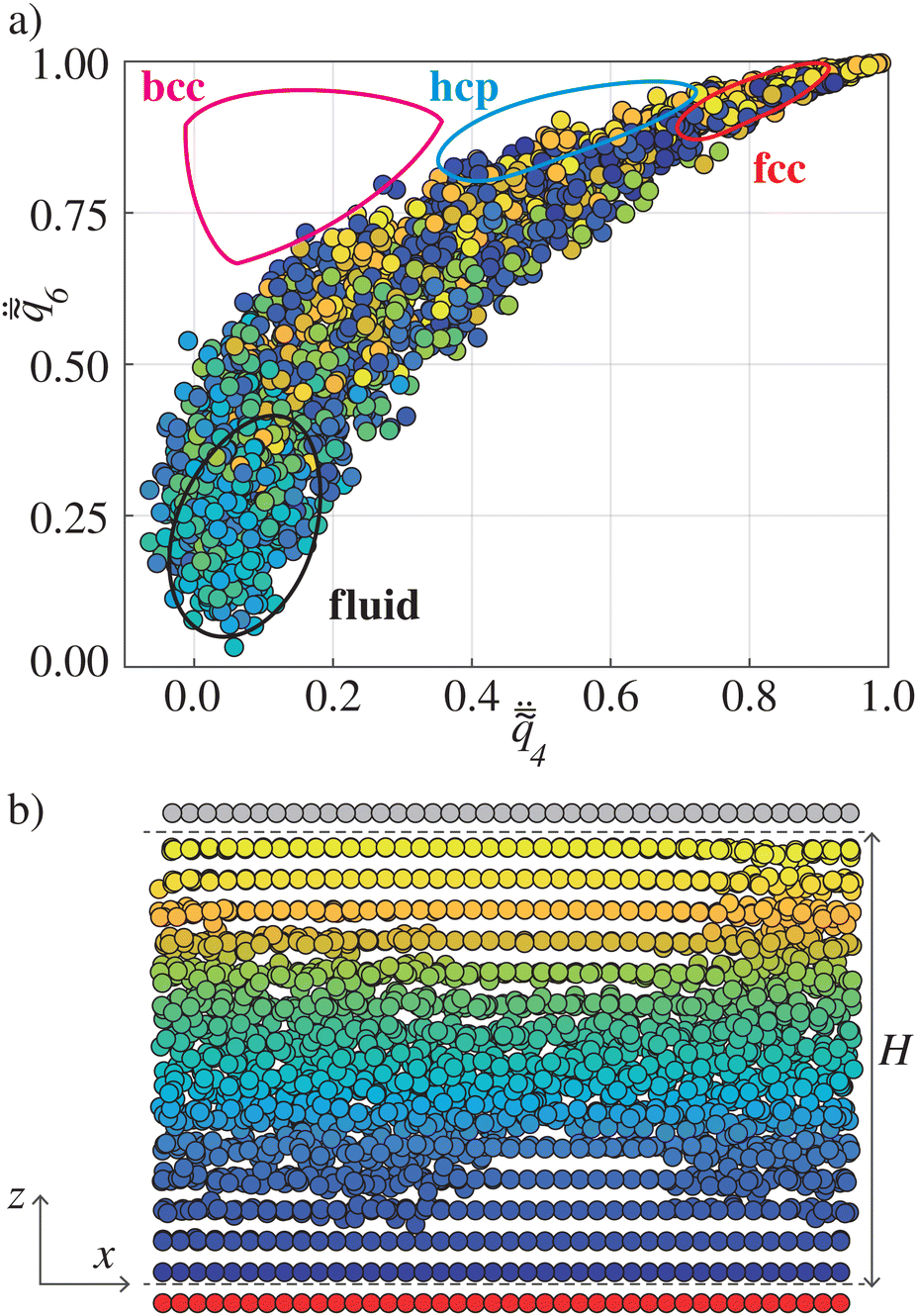
Crystallization in Load-Controlled Shearing Flows of Monosized Spheres.
Esma Kurban, Dalila Vescovi, and Diego Berzi
Soft Matter, January 2025
Abstract
Identical, inelastic spheres crystallize when sheared between two parallel, bumpy planes under a constant load larger than a minimum value. We investigate the effect of the inter-particle friction coefficient of the sheared particles on the flow dynamics and the crystallization process with discrete element simulations. If the imposed load is about the minimum value to observe crystallization in frictionless spheres, adding small friction to the granular assembly results in a shear band adjacent to one of the planes and one crystallized region, where a plug flow is observed. The ordered particles are arranged in both face-centered cubic and hexagonal-closed packed phases. The particles in the shear band are in between the crystalline state and the fluid state, but the latter is never reached, which results in a large shear resistance. As the particle friction increases, the shear band disappears, and the ordering in the core region is destroyed. A significant portion of the particles are in a fluid state with a zero shear rate, leading to a substantial and unexpected reduction in the shear resistance with respect to the frictionless case. If the imposed load is increased well above the minimum from the onset of crystallization, we observe the formation of one shear band in the core, where the particles are again between the crystalline state and the fluid state, surrounded by two crystallized regions near the boundaries, in which most of the particles are in the face-centered cubic phase and translate as a rigid body with the boundaries themselves. In this case, the macroscopic shear resistance is independent of the particle friction.


Hypericin (C30H16O8) is a naturally occurring substance, an anthraquinone derived from St. John’s wort, possessing outstanding antiviral, antitumor, antibacterial, and antioxidant properties. Today, hypericin is primarily used in medicinal applications. It is a small, flat organic molecule with a graphene-like core surrounded by oxidized functions, suggesting it could act as a graphene precursor in tribological contacts. Therefore, we investigated the lubrication properties of hypericin as an additive in glycerol, used as a base oil. It is well established that glycerol is superlubricious under full and thin film elastohydrodynamic (EHD) lubrication regimes but generally fails with steel under more severe conditions (mixed and boundary regimes). We studied the effect of hypericin added to glycerol for steel-on-steel and steel-on-silicon friction pairs. For the steel-on-steel configuration, results show that hypericin is a strong anti-wear additive due to its antioxidant properties that scavenge OH radicals. Moreover, hypericin is also an efficient friction-reducing agent, providing a steady state and robust ultralow friction coefficient (0.02–0.03). Thus, it outperforms most traditional additive formulations under the same conditions, although it does not achieve superlubricity (coefficient of friction (CoF) < 0.01) under more severe conditions. For steel-on-silicon, hypericin significantly extends the superlubricity regime of glycerol to lambda ratios well below unity (low sliding speeds). The mechanism of superlubricity is attributed to the friction-induced formation of graphene layers from hypericin molecules, smoothing friction surfaces, and operating a hybrid liquid–solid superlubricious system.
Hypericin Enhances Superlubricity of Glycerol by Acting as Graphene Precursor.
Paul Marie Zubieta-Laborde, Yun Long, Thomas Lubrecht, Graham L. W. Cross, Frédéric Dubreuil, Jean Michel Martin, and Maria Isabel De Barros Bouchet
Friction, January 2025
Abstract

Friction reduction of AlTiN-based hard coatings is gaining much attention among researchers worldwide to broaden their tribological applications. Metal/non-metal inclusions, as well as the design of a novel coating architecture, are primarily focused on reducing friction while retaining wear resistance. This study investigates the tribological characteristics of magnetron sputtered AlTiN coatings by incorporating amorphous carbon (a–C) at different concentrations (5–25 at.%), as well as the compositionally graded AlTiN/a-C coatings (CGC). The XPS and Raman spectroscopy results confirm the presence of a-C features, while XRD reveals the formation of ceramic carbide phases in AlTiN coatings with higher carbon content and CGC coatings. The CGC AlTiN/a-C have shown a maximum hardness of 34.3 GPa and an elastic modulus of 321 GPa due to their refined grain structure. The CGC had the lowest friction (0.18 at 300 K and 0.37 at 673 K), as well as improved wear resistance (2.74 × 10⁻⁷ mm3/Nm (300 K) and 4.93 × 10⁻⁷ mm3/Nm (673 K)). The tribolayers are found to be mainly composed of sp2/sp3 bonded a-C features (including C=C/C─C, C─N, and C─O), which reduces the friction force significantly. The CGC AlTiN/a-C coating has exhibited improved wear resistance behavior due to their finely grained structure and improved mechanical properties.
Low Friction Characteristics and Tribochemistry Analysis of Novel AlTiN/a-C Based Nanocomposite Coatings.
D. Dinesh Kumar, Kamalan Kirubaharan, Kalpataru Panda, P. Kuppusami, A. Arivarasan, Tanja Stimpel-Lindner, and Georg S. Duesberg
Applied Surface Science, December 2024
Abstract

Extended Kinetic Theory Applied to Pressure-Controlled Shear Flows of Frictionless Spheres Between Rigid, Bumpy Planes.
Dalila Vescovi, Astrid S. de Wijn, Graham L. W. Cross, and Diego Berzi
Soft Matter, October 2024
Abstract
We numerically investigate, through discrete element simulations, the steady flow of identical, frictionless spheres sheared between two parallel, bumpy planes in the absence of gravity and under a fixed normal load. We measure the spatial distributions of solid volume fraction, mean velocity, intensity of agitation and stresses, and confirm previous results on the validity of the equation of state and the viscosity predicted by the kinetic theory of inelastic granular gases. We also directly measure the spatial distributions of the diffusivity and the rate of collisional dissipation of the fluctuation kinetic energy, and successfully test the associated constitutive relations of the extended kinetic theory, i.e., a kinetic theory which includes the role of velocity correlations. We then phrase and numerically integrate a system of differential equations governing the flow, with suitably modified boundary conditions. We show a remarkable qualitative and quantitative agreement with the results of the discrete simulations. In particular, we study the effect of (i) the coefficient of collisional restitution, (ii) the imposed load and (iii) the bumpiness of the planes on the profiles of the hydrodynamic fields, the ratio of shear stress-to-pressure and the gap between the bumpy planes. Finally, we predict the critical value of the imposed load above which crystallization occurs, based on the value of the solid volume fraction near the boundaries obtained from the numerical solution of the kinetic theory. This notably reproduces what we observe in the discrete simulations.
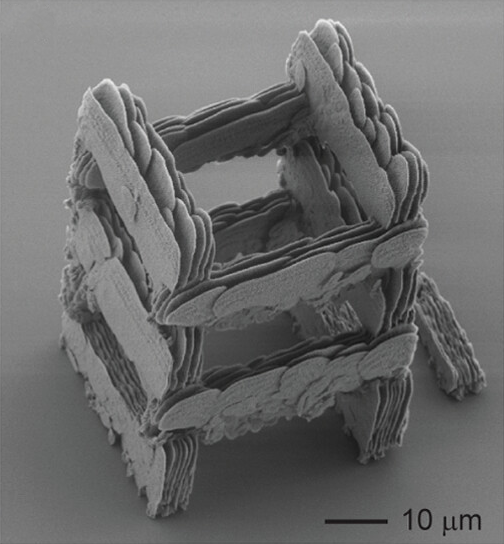

3D Printing of Hierarchical Structures Made of Inorganic Silicon-Rich Glass Featuring Self-Forming Nanogratings.
Po-Han Huang, Shiqian Chen, Oliver Hartwig, David E. Marschner, Georg S. Duesberg, Göran Stemme, Jiantong Li, Kristinn B. Gylfason, and Frank Niklaus
ACS Nano, October 2024
Abstract
Hierarchical structures are abundant in nature, such as in the superhydrophobic surfaces of lotus leaves and the structural coloration of butterfly wings. They consist of ordered features across multiple size scales, and their advantageous properties have attracted enormous interest in wide-ranging fields including energy storage, nanofluidics, and nanophotonics. Femtosecond lasers, which are capable of inducing various material modifications, have shown promise for manufacturing tailored hierarchical structures. However, existing methods, such as multiphoton lithography and three-dimensional (3D) printing using nanoparticle-filled inks, typically involve polymers and suffer from high process complexity. Here, we demonstrate the 3D printing of hierarchical structures in inorganic silicon-rich glass featuring self-forming nanogratings. This approach takes advantage of our finding that femtosecond laser pulses can induce simultaneous multiphoton cross-linking and self-formation of nanogratings in hydrogen silsesquioxane. The 3D printing process combines the 3D patterning capability of multiphoton lithography and the efficient generation of periodic structures by the self-formation of nanogratings. We 3D-printed micro-supercapacitors with large surface areas and a high areal capacitance of 1 mF/cm2 at an ultrahigh scan rate of 50 V/s, thereby demonstrating the utility of our 3D printing approach for device applications in emerging fields such as energy storage.
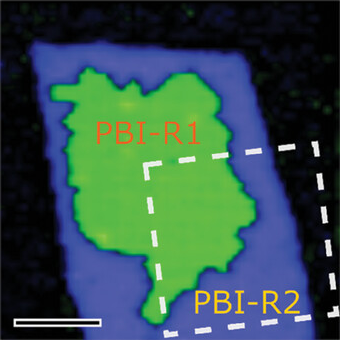

Orientation Dependent Interlayer Coupling in Organic-Inorganic Heterostructures.
Cian Bartlam, Nihit Saigal, Stefan Heiserer, Hendrik Lambers, Ursula Wurstbauer, Georg S. Duesberg
Advanced Functional Materials, July 2024
Abstract
Organic–inorganic 2D heterostructures combine the high optical absorption of organic molecules with exciton-dominated optical properties in layered transition metal dichalcogenides (TMDs) such as MoS2. Critical to the interaction and the optical response in such hybrid systems is the electronic band alignment at the interface between the two species. Here, the coupling of monolayers of perylene derivatives is investigated with bilayer MoS2. In particular, variation in the perylene orientation on the MoS2 surface is identified using Raman spectroscopy and scanning probe microscopy. Low-temperature optical spectroscopy reveals orientation-dependent interlayer exciton formation. Furthermore, power-dependent photoluminescence measurements provide insight into the modified interlayer charge transfer in these heterostructures. A saturation of interlayer states is found under high excitation power when the perylene molecules are in a perpendicular orientation to the surface that leads to electron accumulation in the MoS2, whereas parallel alignment of the perylene molecules leads to enhanced populations of organic–inorganic interlayer excitons. This work provides insights into the optimization of organic–inorganic heterostructures, with particular relevance to applications for optoelectronic and excitonic devices.


Controllable and Reproducible Growth of Transition Metal Dichalcogenides by Design of Experiments.
Stefan Heiserer, Peter Eder, Cormac Ó Coileáin, Josef Biba, Tanja Stimpel-Lindner, Cian Bartlam, Ulrich Rührmair, and Georg S. Duesberg
Advanced Electronic Materials, July 2023
Abstract
Controllable and reproducible synthesis of 2D materials is crucial for their future applications. Chemical vapor deposition (CVD) promises scalable and high-quality growth of 2D materials. However, to optimize CVD growth, multiple parameters have to be carefully selected. Design of experiments (DoE) is a consistent and versatile tool to optimize all parameters simultaneously in a controlled way. This study exploits DoE statistical approaches to show how the CVD growth of transition metal dichalcogenides (TMDs) can be optimized, using tungsten disulfide as an example. A designed set of 29 different processes is used to cover the entire parameter space. The resulting growth output is characterized in terms of material morphology for factors such as single crystal size and continuous film size. The nonlinear model used to fit the output as a function of input parameters provides crucial insights into the nontrivial CVD process ensuring easy and systematic growth optimization. The predicted processes show successful optimization with respect to both the resulting material and the process stability. This powerful technique can be adapted for different setups and other TMD materials.
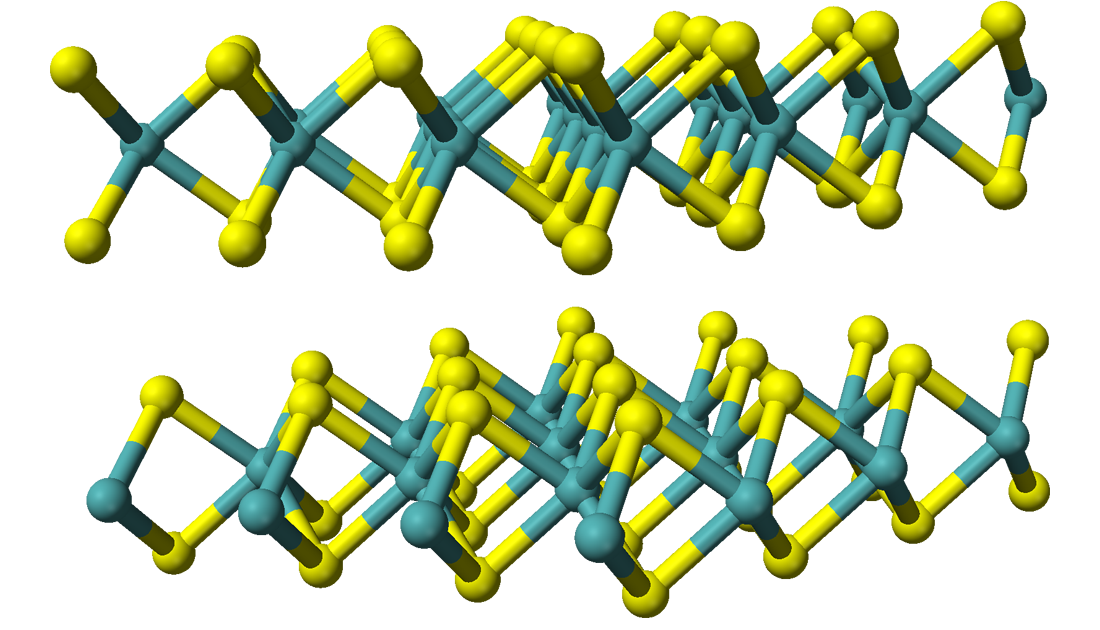
Stiffness and Atomic-Scale Friction in Superlubricant MoS₂ Bilayers.
Rui Dong, Alessandro Lunghi, and Stefano Sanvito
The Journal of Physical Chemistry Letters, June 2023
Abstract
Molecular dynamics simulations, performed with chemically accurate ab initio machine-learning force fields, are used to demonstrate that layer stiffness has profound effects on the superlubricant state of two-dimensional van der Waals heterostructures. We engineer bilayers of different rigidity but identical interlayer sliding energy surface and show that a 2-fold increase in the intralayer stiffness reduces the friction by a factor of ∼6. Two sliding regimes as a function of the sliding velocity are found. At a low velocity, the heat generated by the motion is efficiently exchanged between the layers and the friction is independent of the layer order. In contrast, at a high velocity, the friction heat flux cannot be exchanged fast enough and a buildup of significant temperature gradients between the layers is observed. In this situation, the temperature profile depends on whether the slider is softer than the substrate.

Three-Dimensional Printing of Silica Glass with Sub-Micrometer Resolution.
Po-Han Huang, Miku Laakso, Pierre Edinger, Oliver Hartwig, Georg S. Duesberg, Lee-Lun Lai, Joachim Mayer, Johan Nyman, Carlos Errando-Herranz, Göran Stemme, Kristinn B. Gylfason, and Frank Niklaus
Nature Communications, June 2023
Abstract
Silica glass is a high-performance material used in many applications such as lenses, glassware, and fibers. However, modern additive manufacturing of micro-scale silica glass structures requires sintering of 3D-printed silica-nanoparticle-loaded composites at ~1200 °C, which causes substantial structural shrinkage and limits the choice of substrate materials. Here, 3D printing of solid silica glass with sub-micrometer resolution is demonstrated without the need of a sintering step. This is achieved by locally crosslinking hydrogen silsesquioxane to silica glass using nonlinear absorption of sub-picosecond laser pulses. The as-printed glass is optically transparent but shows a high ratio of 4-membered silicon-oxygen rings and photoluminescence. Optional annealing at 900 °C makes the glass indistinguishable from fused silica. The utility of the approach is demonstrated by 3D printing an optical microtoroid resonator, a luminescence source, and a suspended plate on an optical-fiber tip. This approach enables promising applications in fields such as photonics, medicine, and quantum-optics.
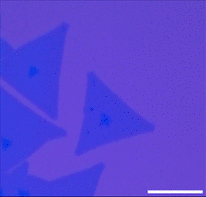
Identification of Ubiquitously Present Polymeric Adlayers on 2D Transition Metal Dichalcogenides.
Rita Tilmann, Cian Bartlam, Oliver Hartwig, Bartlomiej Tywoniuk, Nikolas Dominik, Conor P. Cullen, Lisanne Peters, Tanja Stimpel-Lindner, Niall McEvoy, and Georg S. Duesberg
ACS Nano, May 2023
Abstract
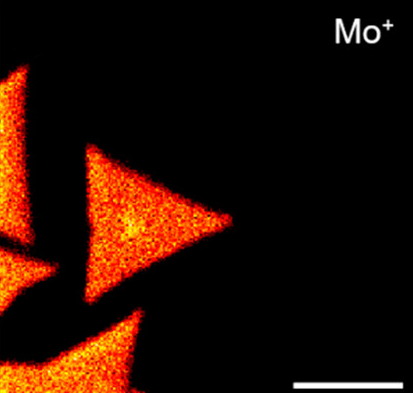
The interest in 2D materials continues to grow across numerous scientific disciplines as compounds with unique electrical, optical, chemical, and thermal characteristics are being discovered. All these properties are governed by an all-surface nature and nanoscale confinement, which can easily be altered by extrinsic influences, such as defects, dopants or strain, adsorbed molecules, and contaminants. Here, we report on the ubiquitous presence of polymeric adlayers on top of layered transition metal dichalcogenides (TMDs). The atomically thin layers, not evident from common analytic methods, such as Raman spectroscopy, X-ray photoelectron spectroscopy (XPS), or scanning electron microscopy (SEM), could be identified with highly resolved time-of-flight secondary ion mass spectrometry (TOF-SIMS). The layers consist of hydrocarbons, which preferentially adsorb to the hydrophobic van der Waals surfaces of TMDs, derived from the most common methods. Fingerprint fragmentation patterns enable us to identify certain polymers and link them to those used during preparation and storage of the TMDs. The ubiquitous presence of polymeric films on 2D materials has wide reaching implications for their investigation, processing, and applications. In this regard, we reveal the nature of polymeric residues after commonly used transfer procedures on MoS2 films and investigate several annealing procedures for their removal.
You can also find our articles on our Zenodo repository.
All images on this page, unless otherwise stated, are from the articles they appear beside and are shared through Creative Commons Licenses. The images for graphene, hypericin, glycerol, and molybdenite were sourced from Wikimedia Commons and are attributed to users J_Alves, Jynto, Benjah-bmm27, and Ben Mills, respectively; these images are shared through Creative Commons Licenses or exist in the public domain.